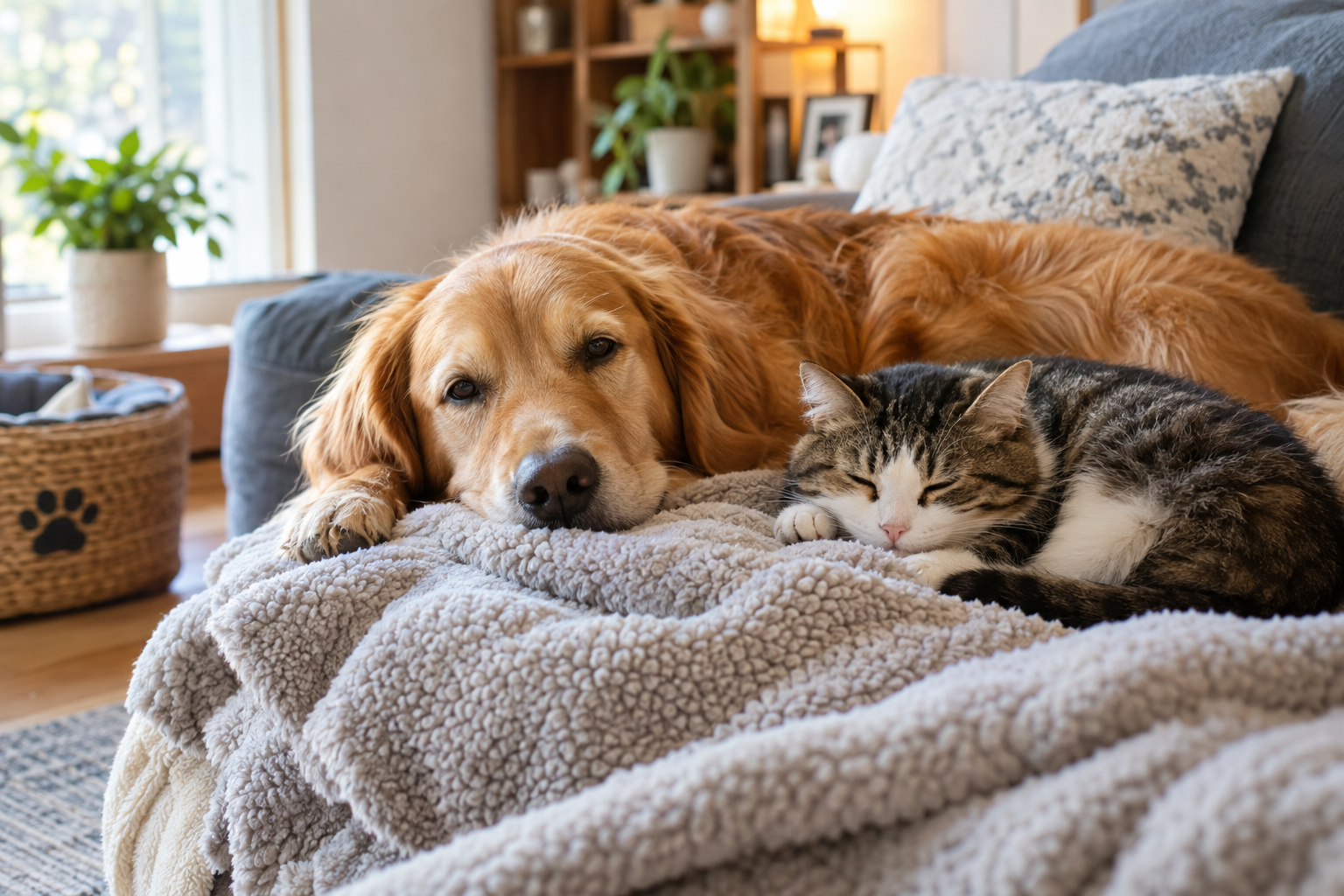
Pets have a peculiar talent for turning perfectly respectable furniture into their personal kingdoms. A sofa purchased with considerable thought can quickly become a scratching station, nap zone, fur repository, snack lounge, and occasional hiding place. The cat claims the armrest. The dog claims the entire middle cushion. Somehow, everyone still insists that the sofa belongs to the household.
Furniture covers for pets offer a practical compromise. Instead of preventing animals from enjoying furniture altogether, covers create a protective layer between claws, fur, muddy paws, shedding, drool, crumbs, and upholstery. They can make everyday cleaning easier while extending the useful life of sofas, chairs, recliners, and other upholstered pieces.
The modern pet cover is also considerably more sophisticated than the old-fashioned sheet thrown haphazardly over a couch. Contemporary designs may include waterproof backing, quilted surfaces, nonslip materials, elastic straps, reinforced seams, and fabrics engineered to resist scratching or excessive wear.
Choosing the right cover, however, requires more than finding an attractive pattern.
The best solution combines durability, comfort, stability, washability, and compatibility with the pet’s habits. After all, a cover that looks magnificent for five minutes but slides onto the floor whenever a Labrador jumps onto the sofa is less of a solution and more of an elaborate floor decoration.
Why Furniture Covers Matter in Pet-Friendly Homes
Sharing furniture with pets has obvious benefits. Dogs and cats are social animals, and many enjoy remaining close to their human companions. A sofa can provide warmth, elevation, comfort, and a convenient vantage point from which to observe household activity.
Unfortunately, upholstery is not always designed to accommodate those habits.
Pet hair can become embedded in woven fabric. Claws can snag delicate materials. Wet paws can leave marks, while enthusiastic chewing can damage corners and seams. Even a clean pet can contribute oils, dander, and debris to frequently used furniture.
Furniture covers create a sacrificial layer.
Rather than exposing expensive upholstery to every adventure, a washable cover absorbs much of the everyday wear. When the cover becomes dirty, it can be removed and cleaned.
This transforms maintenance from an upholstery crisis into ordinary laundry.
That distinction matters.
The Main Types of Furniture Covers for Pets
Not every pet cover performs the same function. Some emphasize protection, while others focus on softness or appearance. Understanding the major categories makes selection easier.
Quilted Sofa Covers
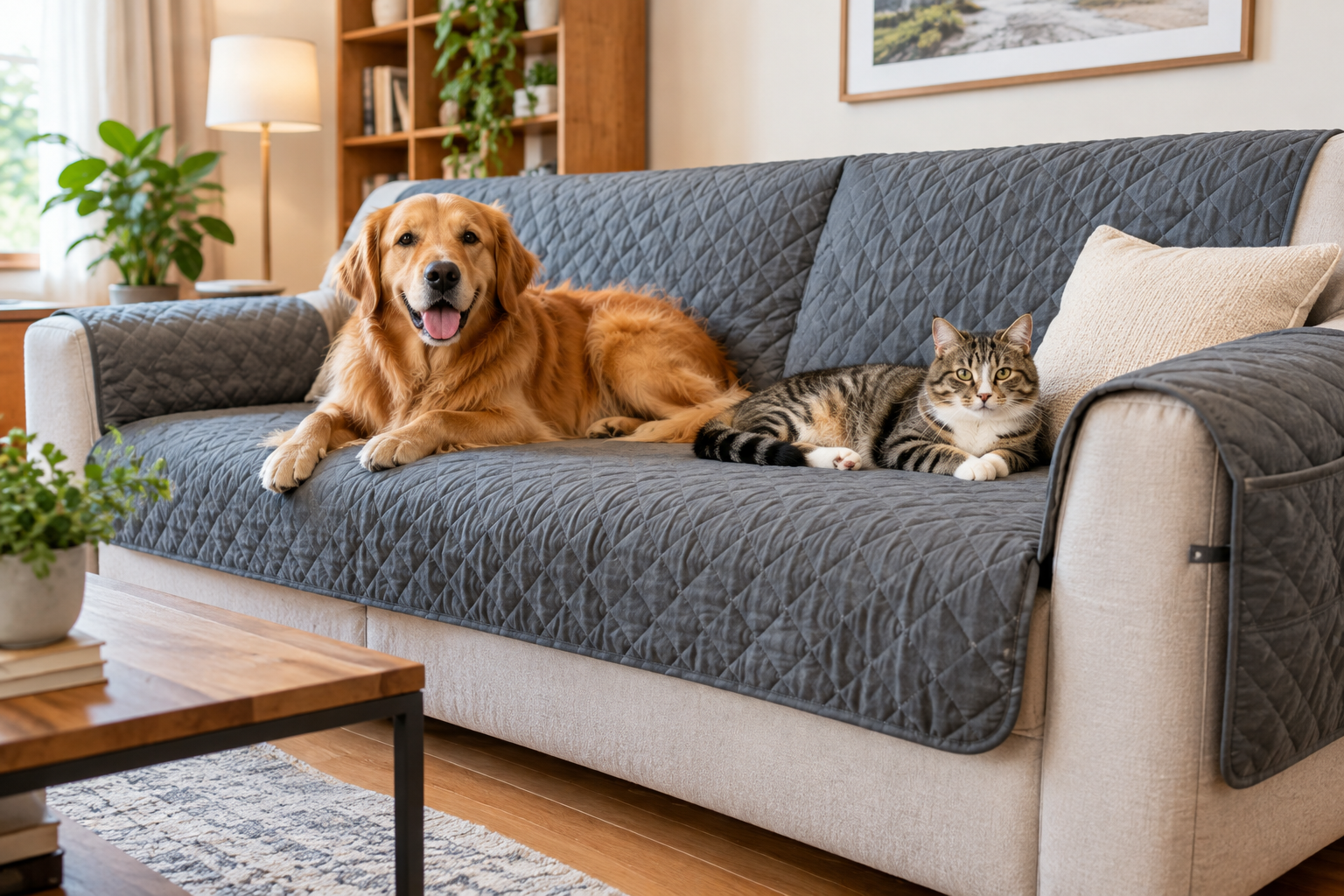
Quilted covers are among the most versatile choices for households with dogs and cats.
They typically consist of multiple fabric layers stitched together, producing a padded surface that feels comfortable while offering greater protection than a thin sheet. The textured construction can also make minor spills less likely to spread immediately across the entire surface.
Many quilted covers include nonslip backing or attachment mechanisms.
They are particularly useful for everyday sofa protection because they balance comfort and practicality.
Waterproof Furniture Covers
Water-resistant and waterproof covers are designed for situations where moisture is a concern.
This can include muddy paws, wet fur, accidental spills, drooling, and pet accidents. Waterproof backing prevents liquid from reaching the upholstery immediately, although no cover should be assumed to provide unlimited protection against prolonged saturation.
These designs can be particularly useful for puppies and senior animals.
A waterproof layer can also be helpful after rainy walks. The dog comes inside, shakes approximately seventeen gallons of imaginary water across the room, and settles on the sofa. A waterproof cover suddenly seems like an extremely sophisticated household investment.
Reversible Covers
Reversible designs offer two usable surfaces and can make furniture protection more adaptable.
One side might feature a darker color suitable for hiding pet hair, while the other offers a lighter or more decorative appearance. Reversibility also distributes wear between surfaces.
This can extend the practical lifespan of the cover.
Pet Throws
Pet throws are generally simpler than fitted furniture covers. They can be draped over a particular area rather than covering the entire sofa.
They are useful when a pet consistently occupies one location.
For example, if a dog always sleeps on the left side of the couch, there may be little reason to cover every cushion. A strategically positioned throw can protect the frequently used section while preserving more of the sofa’s original appearance.
The disadvantage is stability.
Throws can shift easily when pets move around.
Hammock-Style Covers
Hammock covers are designed primarily for vehicles but can also be useful in certain furniture applications. They attach at multiple points and create a suspended protective surface.
For automobiles, this design can prevent pets from falling into footwells while protecting seats from fur and dirt.
The broader principle is useful for furniture as well: attachment points can provide substantially better stability than a loose piece of fabric.
Understanding sofa covers for pets
The phrase sofa covers for pets encompasses a broad range of products rather than a single design.
Some covers are intended to protect the entire sofa. Others cover only seating cushions. Some resemble conventional upholstery while others are visibly designed as pet accessories.
The correct option depends on the household.
If the principal concern is shedding, a washable surface that allows hair to be removed easily may be enough. If the pet frequently enters the house with wet paws, moisture resistance becomes more important.
For animals that scratch, durability should be prioritized.
For homes where aesthetics are especially important, a fitted cover may provide a more polished appearance than a loose throw.
Measuring the Sofa
Before purchasing a cover, measure the furniture carefully.
Important dimensions include:
- Overall sofa width
- Seat depth
- Back height
- Armrest width
- Cushion dimensions
- Distance between cushions
- Whether cushions are removable
- Whether the sofa has unusual contours
A cover that is too small may leave vulnerable areas exposed. One that is excessively large can bunch, drag, or create folds.
Measurements are particularly important for sectional sofas.
A standard three-seat cover may not accommodate a chaise or L-shaped configuration properly. In such cases, modular covers or sectional-specific designs may provide better results.
Why Stability Is So Important
A furniture cover that constantly moves can become more irritating than the mess it was designed to prevent.
Pets rarely sit politely and motionless.
Dogs circle before lying down. Cats knead surfaces with their paws. Large animals leap onto cushions with considerable momentum. Smaller animals may tunnel underneath the cover because apparently the cover has become an exciting new cave.
This movement generates friction.
Without adequate anchoring, the fabric gradually migrates toward the floor.
That is why a pet sofa cover that stays in place can be substantially more practical than a generic throw.
Features of a pet sofa cover that stays in place
A pet sofa cover that stays in place generally incorporates one or more mechanisms designed to reduce movement.
These may include:
Nonslip Backing
Rubberized or textured backing creates friction between the cover and upholstery.
This can reduce sliding, particularly on smooth leather or synthetic materials.
Elastic Straps
Straps can wrap around cushions or the back of the sofa. They provide a simple mechanical means of holding the cover in position.
Tuck-In Flaps
Some designs include extended fabric sections that can be tucked deeply between cushions.
This is particularly effective on sofas with removable or separated cushions.
Anchoring Rods
Certain covers include foam or plastic rods that fit into cushion gaps. When tucked securely, they help prevent the fabric from being pulled upward.
Fitted Construction
A cover specifically shaped for the furniture can provide better stability than a generic rectangular throw.
The more closely the cover conforms to the sofa, the fewer opportunities there are for excess fabric to move.
Cats and the Problem of Claws
Cats present a special challenge.
A cat may use the sofa for sleeping, lounging, observing the outside world, or sharpening its claws despite having a perfectly adequate scratching post located approximately twelve centimeters away.
The solution is not necessarily an indestructible cover.
Instead, choose a material that can tolerate ordinary feline activity without unraveling easily. Tightly woven fabrics are generally preferable to extremely loose weaves when claw snagging is a concern.
Avoid covers with dangling decorative threads.
A loose thread can become irresistible to a curious cat.
Unfortunately, cats are often remarkably committed to investigating anything that looks remotely interesting.
Dogs and Everyday Wear
Dogs create a different pattern of furniture wear.
Large breeds can place substantial mechanical stress on cushions and covers when jumping onto furniture. Active dogs may also carry grit, grass, leaves, and moisture onto the sofa.
A durable cover should therefore tolerate repeated use.
Water resistance can be useful, but so can a surface that releases hair easily. Some materials collect hair in dense clumps, whereas smoother textiles allow fur to be removed with a brush or vacuum.
For heavy shedders, this distinction can dramatically reduce cleaning time.
The Importance of Pet-Resistant Materials
The phrase pet-resistant sofa covers can refer to products designed to withstand common forms of pet-related wear, but resistance should not be interpreted as absolute immunity.
No ordinary textile should be considered invulnerable to a determined dog or cat.
A pet-resistant cover may nevertheless provide better performance through:
- Tightly woven fibers
- Reinforced seams
- Abrasion-resistant fabric
- Durable stitching
- Strong backing
- Reduced snagging
- Easy hair removal
- Water-resistant layers
These attributes help the cover survive ordinary domestic use.
They do not transform it into medieval armor.
pet-resistant sofa covers and Fabric Selection
Different fabrics behave differently under pet-related stress.
Microfiber
Microfiber can be a practical choice because its relatively dense construction tends to resist some forms of snagging. Its smooth surface can also make hair removal easier.
However, specific microfiber constructions vary considerably, so the term alone should not determine a purchase.
Canvas
Canvas is sturdy and well suited to high-use environments.
Its robust structure can tolerate considerable wear, making it attractive for households with active dogs.
The trade-off is that some canvas covers may feel less plush than fleece or quilted alternatives.
Polyester
Polyester is common in pet products because it can be durable, lightweight, and relatively easy to clean.
Blended polyester fabrics can offer a useful balance between softness and resilience.
Cotton
Cotton feels natural and breathable but may absorb moisture more readily than synthetic alternatives.
For warm climates, however, that breathability can be an advantage.
Velvet and Plush Textures
These fabrics are luxurious but may require more consideration in households with heavy shedders or claw-prone cats.
Their tactile appeal can be excellent.
Their practical tolerance for aggressive scratching may be less impressive.
Furniture Covers and Temperature
Pets notice thermal differences.
A thick quilted cover can make a sofa warmer and more inviting during cooler weather. In hot climates, however, excessive insulation can make the surface less comfortable.
Breathable materials may be preferable for warm environments.
This is particularly relevant in homes without constant air conditioning. A pet may initially enjoy a plush cover but abandon it when the room becomes hot.
A reversible cover can offer useful seasonal flexibility.
One side can provide warmth and cushioning, while the other offers a lighter surface.
Furniture Protection Beyond Sofas
Although sofas receive most of the attention, furniture covers can protect many other household surfaces.
Armchairs
An armchair may become a favorite pet perch because it provides elevation without being too far from humans.
A fitted cover can protect the seat, arms, and back.
Recliners
Recliners can be difficult to cover because of their moving components.
The cover must not interfere with mechanical operation. Excess fabric should never be allowed to obstruct moving parts.
Ottomans
Ottomans are often overlooked but can become popular pet platforms.
A simple washable cover can prevent repeated exposure to fur and muddy paws.
Dining Chairs
Cats sometimes discover that dining chairs make excellent observation posts. Removable covers can simplify cleaning.
Beds
Pets that sleep on human beds can leave substantial amounts of fur behind.
A washable protective layer can make laundering considerably easier.
Furniture Covers for Puppies
Puppies are delightful.
They are also tiny agents of entropy.
Young dogs may chew fabric, dig at bedding, track dirt indoors, and have occasional accidents while learning household routines. Furniture covers can provide an additional layer of protection during this developmental period.
Water resistance is especially valuable.
However, covers should be inspected frequently. If a puppy begins chewing and tearing the material, the damaged cover should be removed.
A product designed to protect furniture should never become an ingestion hazard.
Furniture Covers for Senior Pets
Older pets may spend more time resting on furniture.
They can also experience reduced mobility and may have difficulty jumping or climbing. A cover with a stable surface can make the sofa more comfortable, but excessive bunching should be avoided.
Smooth, secure surfaces are often preferable.
For senior animals, the goal is not simply to protect upholstery but also to preserve ease of movement.
Cleaning Pet Furniture Covers
The greatest advantage of a removable cover is its cleanability.
Before washing, remove loose hair when possible. A vacuum cleaner, lint roller, rubber brush, or grooming glove can help.
Follow the manufacturer’s care instructions carefully.
Some covers can tolerate machine washing and tumble drying. Others require lower temperatures or air drying.
Avoid assuming that a cover is washable simply because it is made from fabric.
Waterproof layers may have specific requirements. Excessive heat can damage coatings or backing materials.
Establishing a Cleaning Routine
A regular cleaning schedule is more effective than waiting until the cover becomes visibly filthy.
Frequency depends on:
- Number of pets
- Shedding intensity
- Outdoor activity
- Allergies within the household
- Accidents
- Climate
- Frequency of sofa use
A household with two heavy-shedding dogs may need considerably more frequent washing than a home with one indoor cat.
In humid climates, complete drying is particularly important.
Managing Pet Hair
Pet hair is perhaps the most conspicuous challenge.
Some fabrics behave like magnetic fields for fur. Others allow hair to remain on the surface where it can be removed comparatively easily.
For heavy shedders, consider smooth or tightly woven surfaces.
A lint roller can help with small areas. A vacuum attachment may be more efficient for larger surfaces.
Rubber grooming tools can also gather hair surprisingly effectively.
The trick is to remove loose hair before washing whenever practical. Large quantities of hair entering the washing machine can accumulate inside filters and drains.
Waterproofing and Accidents
Accidents are inevitable with some pets.
Puppies are still learning. Senior animals may experience reduced bladder control. Illness can also produce unexpected incidents.
A waterproof or water-resistant cover can provide valuable protection.
The key distinction is between a cover that merely resists a small spill and one designed to prevent liquid from reaching upholstery. Product construction determines the level of protection.
Even with a waterproof cover, prompt cleaning is important.
The longer moisture remains trapped against upholstery, the greater the likelihood of unpleasant odors and persistent staining.
Aesthetic Considerations
Pet-friendly furniture does not have to resemble a veterinary waiting room.
Modern covers are available in numerous colors, textures, and patterns. Neutral shades can blend into contemporary interiors, while patterned designs can make pet hair less conspicuous.
Darker fabrics may conceal some dirt but can make light-colored hair more visible.
Lighter fabrics can do the opposite.
There is no universal winner.
The best color is the one that complements the room while accommodating the realities of the household.
For especially design-conscious interiors, fitted covers can create a more tailored appearance.
Should a Cover Match the Sofa?
Not necessarily.
A contrasting cover can become an intentional decorative element. A neutral sofa paired with a textured cover can create visual interest without overwhelming the room.
The important consideration is whether the cover looks deliberate.
A well-fitted, neatly positioned cover generally appears more polished than an oversized piece of fabric spilling over every edge.
The difference is surprisingly substantial.
Common Mistakes When Buying Pet Furniture Covers
Several mistakes recur when selecting protective furniture covers.
Buying Without Measuring
Furniture dimensions vary dramatically.
A cover designed for one sofa may fit another poorly.
Prioritizing Appearance Over Function
An attractive cover that slides constantly or cannot be washed conveniently will become frustrating.
Ignoring Pet Behavior
A delicate cover may be perfectly suitable for a calm cat but inadequate for an enthusiastic dog.
Choosing Excessive Thickness
Very thick materials are not always more comfortable, particularly in warm climates.
Neglecting the Underside
The top surface receives most of the attention, but backing determines whether the cover remains stable.
Forgetting the Washing Process
If removing, washing, drying, and reinstalling the cover is excessively difficult, maintenance will eventually become inconsistent.
How to Make a Pet Cover Last Longer
Even durable covers benefit from sensible care.
Rotate covers when possible. Address stains promptly. Remove hair regularly. Inspect seams periodically.
Avoid allowing pets to use the furniture as a scratching station if they can be redirected toward appropriate scratching surfaces.
For dogs, keeping paws reasonably clean after outdoor walks can dramatically reduce the amount of debris transferred onto furniture.
For cats, providing attractive scratching posts near the sofa can reduce the temptation to experiment with upholstery.
Environmental management is often more effective than relying on a single protective product.
Are Expensive Covers Better?
Price and performance are not synonymous.
A premium cover may use superior materials and construction, but a moderately priced product can also perform extremely well when it matches the household’s needs.
The useful comparison is not simply cost.
Consider cost per year of service, washability, durability, fit, and replacement frequency.
A slightly more expensive cover that survives several years may ultimately be more economical than an inexpensive cover that requires replacement every few months.
Furniture Covers as a Practical Compromise
There is often an unspoken debate in pet-owning households: should pets be allowed on furniture or not?
Furniture covers offer a third option.
Pets can enjoy the sofa, while the sofa receives a protective barrier.
This arrangement can be particularly effective because it recognizes normal animal behavior rather than attempting to eliminate it entirely.
A dog can curl up beside its owner. A cat can occupy the favored corner. The furniture remains protected.
Everyone wins.
Even the sofa.
Creating a Pet-Friendly Sofa Zone
A dedicated area can make furniture protection even more effective.
Place a washable cover over the pet’s preferred section. Add a familiar blanket or cushion. Keep a toy nearby.
Over time, the animal may naturally gravitate toward this designated area.
For cats, placing the cover near a warm window or elevated position can increase its appeal. Dogs may prefer an area beside the household’s main seating location.
The objective is to make the protected location attractive rather than merely permissible.
Furniture Covers and Travel
Some furniture covers are versatile enough to be used in multiple environments.
A durable cover can protect a hotel sofa, rental property, vacation cabin, or vehicle seat during travel.
This is particularly useful for animals that shed heavily or become muddy during outdoor activities.
Having a dedicated travel cover also prevents the household’s primary sofa cover from being exposed to outdoor grime.
A small amount of planning can therefore prevent a disproportionately large amount of cleaning.
A Practical Selection Checklist
Before purchasing a pet furniture cover, consider the following:
Measure first. Determine the actual dimensions of the furniture.
Identify the main problem. Is it fur, scratching, moisture, dirt, stains, or general wear?
Study the pet. Consider size, breed characteristics, scratching behavior, shedding, and sleeping habits.
Choose suitable fabric. Prioritize durability and climate compatibility.
Check the underside. Nonslip backing can be crucial.
Look for attachment mechanisms. Straps, tuck-in sections, or fitted construction can improve stability.
Confirm washing instructions. Frequent cleaning should be straightforward.
Avoid unnecessary decorations. Loose embellishments can create safety concerns.
Consider appearance. A cover should complement the room rather than create visual chaos.
Think long-term. Durability matters more than novelty.
The Future of Pet-Friendly Furniture
The pet-products industry increasingly treats animals as integral members of the household. This has encouraged manufacturers to develop products that combine domestic aesthetics with specialized functionality.
Furniture covers are part of this broader evolution.
Instead of crude protective sheets, consumers can now find products with tailored dimensions, water-resistant membranes, engineered fabrics, nonslip backing, reversible construction, and machine-washable materials.
The distinction between conventional home furnishings and pet furnishings is becoming less pronounced.
That is a useful development.
A pet-friendly home does not have to sacrifice style, just as stylish furniture does not have to remain permanently vulnerable to animal-related wear.
Final Thoughts
Furniture covers for pets are fundamentally practical accessories, but their usefulness extends beyond simple upholstery protection.
They create washable surfaces. They help manage fur and dirt. They can reduce exposure to moisture. They make furniture easier to maintain and allow pets to remain part of household life without turning every sofa into a permanent monument to shedding.
The most effective sofa covers for pets are selected according to actual household conditions rather than marketing promises. Size, fabric, stability, washability, climate, and animal behavior should all influence the decision.
For homes where covers frequently shift beneath energetic pets, a pet sofa cover that stays in place can make an especially noticeable difference. Stability transforms a cover from an occasional accessory into a genuinely useful piece of household equipment.
And for animals that scratch, shed, or routinely bring outdoor debris indoors, pet-resistant sofa covers can provide an additional layer of resilience.
No furniture cover can defeat every determined pet.
A sufficiently motivated cat will eventually find a loophole. A large dog may still manage to relocate half the cover while turning around three times before lying down. These are among the immutable laws of domestic life.
The objective is not perfection.
It is practical protection.
With the right cover, regular cleaning, and a little behavioral accommodation, pets and furniture can coexist remarkably well. The sofa remains comfortable, the home remains presentable, and the household avoids discovering that the expensive upholstery has quietly become the most popular scratching post in town.