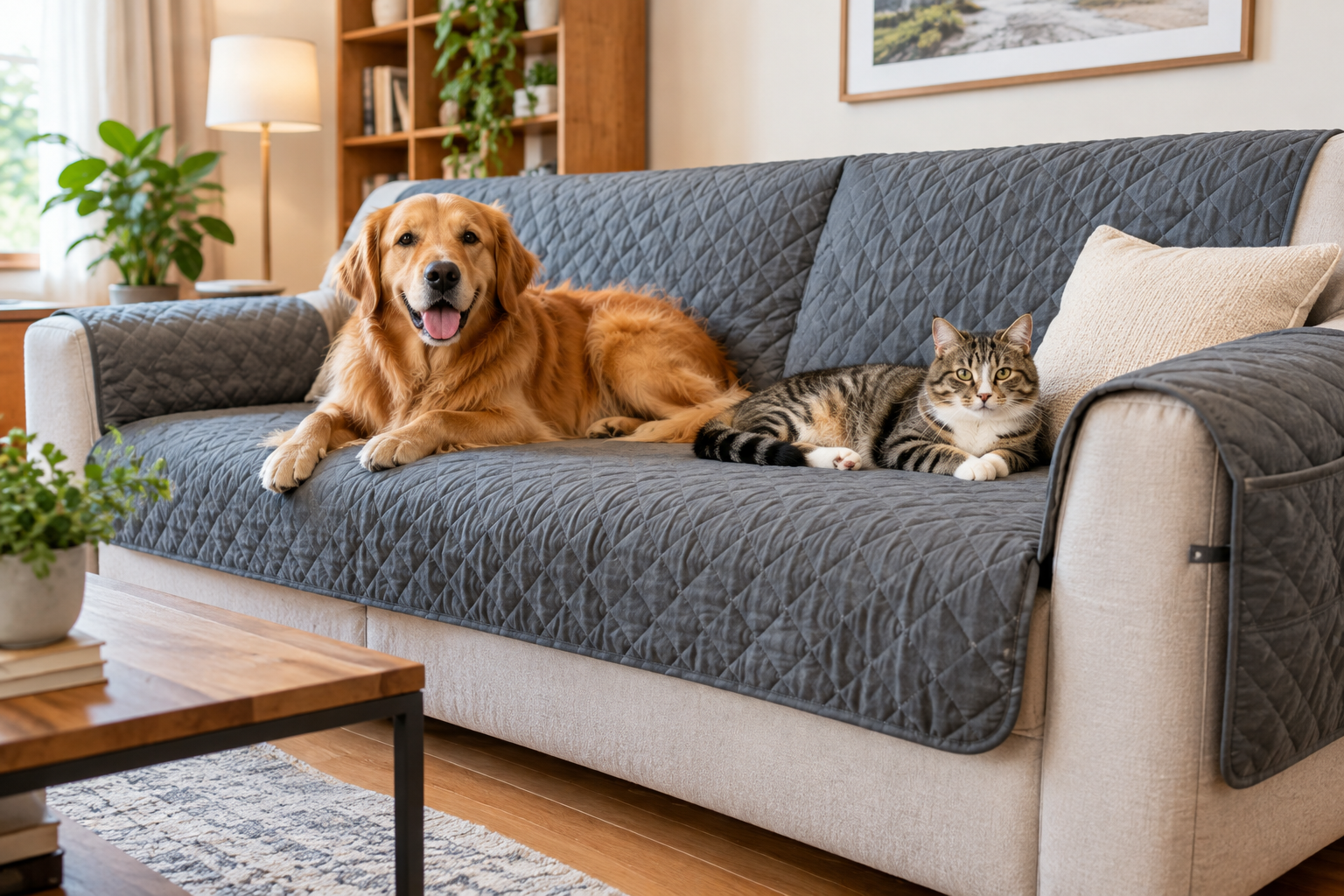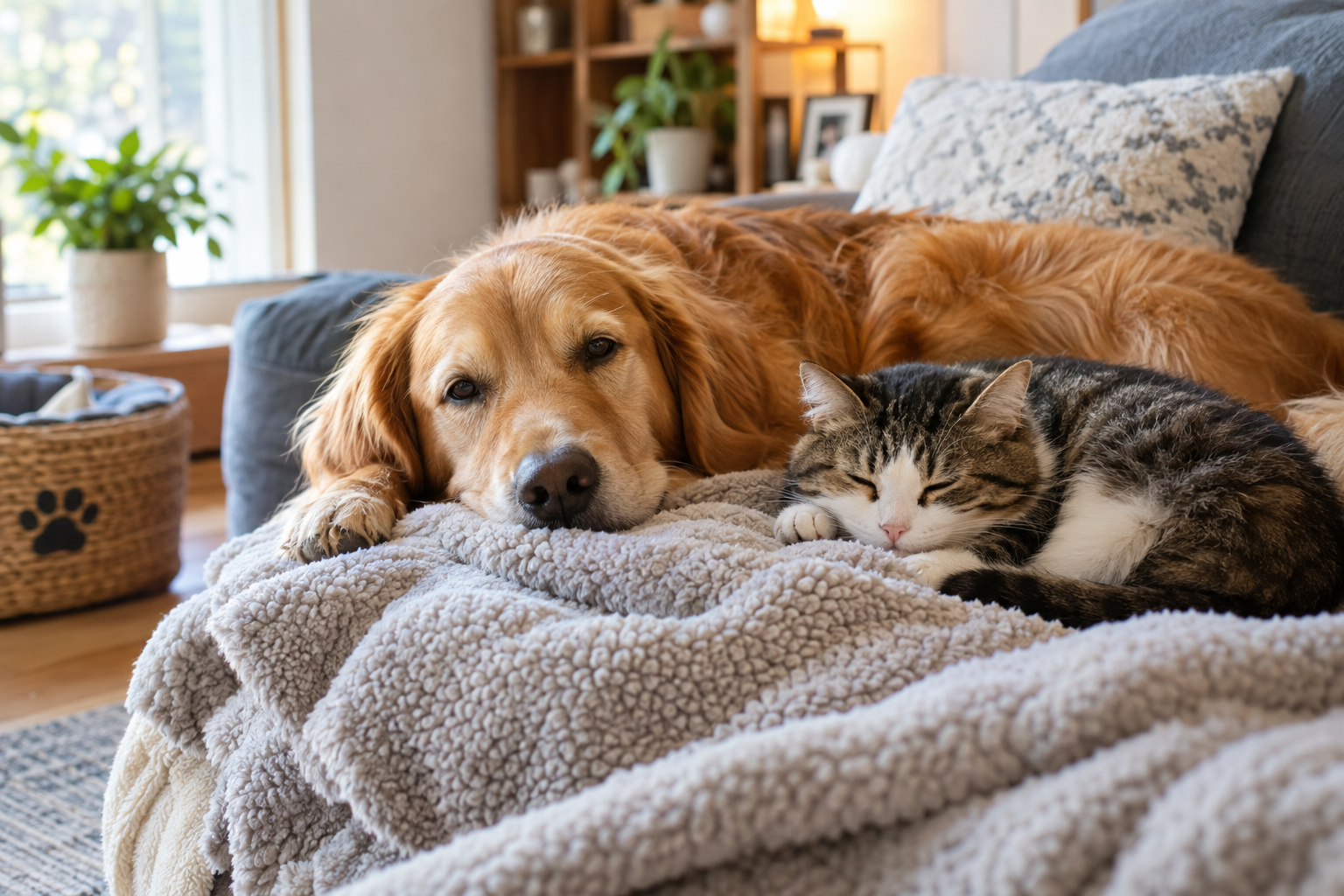
Pets occupy an unusual place in domestic life. They are companions, household members, and creatures with behavioral patterns that often mirror the rhythms of the people around them. Among the many simple products designed to improve their daily comfort, pet blankets remain remarkably practical. A well-chosen blanket can provide warmth, create a familiar resting area, protect furniture, and give a dog or cat a dependable place to retreat.
Although the concept appears straightforward, pet blankets encompass a surprisingly broad range of materials, constructions, sizes, and intended uses. A lightweight fleece blanket may be appropriate for a warm indoor environment, while a thick, insulated option can be useful during colder months. Some designs prioritize softness; others emphasize durability, washability, or resistance to claws and chewing.
The best choice depends less on appearance than on the animal’s individual needs.
Why Pet Blankets Matter
Dogs and cats spend substantial portions of their lives sleeping or resting. Puppies and kittens may sleep for even longer periods, while older animals often appreciate extended periods of uninterrupted repose. A comfortable surface can therefore influence a significant part of a pet’s everyday environment.
A blanket also establishes a defined resting zone. This can be useful for animals that frequently move between furniture, beds, crates, carriers, and floors. Once a pet becomes accustomed to a particular blanket, its scent can become familiar and reassuring.
For dogs especially, a blanket may function as a portable source of familiarity. It can accompany the animal during travel, visits to unfamiliar locations, or overnight stays away from home. The blanket itself becomes a small, recognizable territory.
Cats can benefit from the same principle. Felines often gravitate toward warm, secluded locations, and a blanket can transform an otherwise ordinary chair, shelf, basket, or pet bed into an appealing resting place.
Comfort is therefore only one dimension of the product. Familiarity and environmental predictability matter, too.
Understanding Different Types of Pet Blankets
Pet blankets are manufactured in numerous forms. Understanding the differences can make selection considerably easier.
Fleece Blankets
Fleece is among the most common materials used for pet blankets because it is lightweight, soft, and relatively easy to wash. Its fine synthetic fibers create a warm tactile surface without necessarily making the blanket excessively heavy.
Fleece is particularly useful for indoor environments and moderate temperatures. It can also be folded easily, making it convenient for travel.
However, fleece may retain pet hair. Owners of heavy-shedding breeds or long-haired cats may therefore want a fabric with a surface that releases hair readily during laundering.
Sherpa and Plush Blankets
Sherpa and plush materials offer a deeper, more luxuriant texture. They can be appealing to animals that enjoy burrowing or curling into soft surfaces.
These blankets are particularly attractive during colder weather. Their substantial pile creates a tactile environment that can make a resting space feel more insulated.
The principal consideration is maintenance. Dense fabrics may take longer to dry and can accumulate hair, dander, and other debris if they are not washed regularly.
Cotton Blankets
Cotton is breathable, versatile, and familiar. It tends to be less insulating than thick synthetic fleece, but that can be an advantage in warm climates.
A lightweight cotton blanket can provide a comfortable barrier between a pet and a sofa without creating excessive heat. It is also useful for animals that become warm easily.
For households in tropical or humid environments, breathable fabrics may be preferable to heavily insulated designs.
Quilted and Padded Blankets
Quilted blankets incorporate layers of material, sometimes with an internal filling. They provide greater cushioning than a simple single-layer fabric.
These designs can be particularly useful when placed over hard surfaces. The additional padding creates a modest buffer between the animal and the underlying floor.
For older dogs or cats that prefer softer resting surfaces, a padded blanket can complement a supportive pet bed. It should not, however, be considered a substitute for veterinary guidance or specialized orthopedic bedding when an animal has significant mobility problems.
Waterproof or Water-Resistant Blankets
Water-resistant blankets are designed for practicality rather than pure softness. They may incorporate a moisture-resistant backing that helps protect furniture, vehicle interiors, crates, or flooring.
These blankets are useful for puppies, senior pets, animals prone to accidents, and outdoor activities.
A waterproof layer can also be advantageous when a dog returns indoors after rain. Instead of placing a damp animal directly on upholstery, the blanket provides a protective intermediary surface.
The Role of a comfort blanket for dogs
A comfort blanket for dogs can serve several purposes simultaneously. It provides a familiar texture, creates a dedicated resting surface, and can help establish consistency in a dog’s environment.
Dogs are highly responsive to scent. A blanket that regularly accompanies a dog may accumulate familiar household odors, making it particularly useful when the animal encounters a new environment.
For example, a familiar blanket can be placed inside a crate, carrier, or travel area. During relocation or overnight travel, this familiar object can provide an element of environmental continuity.
The blanket does not need to be elaborate. In many cases, a washable, appropriately sized fabric is sufficient.
Size matters, however. A blanket should allow the dog to lie down comfortably without being so large that it becomes cumbersome or difficult to wash. Small dogs may prefer compact blankets that can be gathered around their bodies, while larger breeds generally require substantially more surface area.
The dog’s sleeping style is another consideration. Some dogs curl tightly into a compact position. Others stretch their legs and occupy considerable horizontal space. A blanket that works perfectly for a curled-up terrier may be inadequate for a large retriever that prefers to sprawl.
Dog Comforters and Everyday Warmth
The term dog comforters can describe thicker bedding intended to provide warmth and cushioning. These products occupy an interesting middle ground between ordinary blankets and dedicated pet beds.
A comforter may be particularly useful when a dog sleeps in a cool room or on a hard surface. Its layered construction can provide additional insulation while creating a softer resting environment.
Nevertheless, warmth should be proportionate to the surroundings.
Dogs differ substantially in their tolerance for heat. A thick comforter may be desirable during a cold winter night but excessive in a warm room. Owners should observe whether the animal seeks out the blanket, moves away from it, or repeatedly changes position.
A pet should always have the ability to move away from a heat-retaining blanket.
This simple principle prevents comfort from becoming overheating.
Choosing the Right Size
The dimensions of a pet blanket should correspond to the animal and its preferred sleeping posture.
A useful starting point is to measure the pet while it is lying in its typical resting position. Add additional surface area around the body so that the animal can shift position without immediately leaving the blanket.
For dogs, consider:
- Body length
- Shoulder width
- Sleeping posture
- Whether the dog likes to burrow
- Whether the blanket will be used inside a crate
- Whether the blanket needs to cover furniture
Cats generally require less surface area, but their behavior is less predictable. A cat may ignore a carefully purchased blanket and instead choose a cardboard box, windowsill, or laundry basket.
That is normal.
Cats often select resting places according to temperature, elevation, privacy, and environmental stimulation. A blanket becomes more useful when placed where the cat already prefers to rest.
Material Selection and Durability
Softness is immediately noticeable, but durability often determines whether a pet blanket remains useful over time.
Dogs may dig at blankets before lying down. Cats may knead them with their claws. Both can shed substantial quantities of hair. Some animals also chew or pull at loose fabric.
Consequently, construction deserves as much attention as fiber type.
Look for:
- Reinforced seams
- Securely finished edges
- Durable stitching
- Minimal loose threads
- Machine-washable construction
- Materials appropriate for the pet’s behavior
A blanket intended for a calm indoor cat can have a very different construction from one used by a young dog that habitually chews bedding.
Washability Is Not Optional
Pet blankets inevitably accumulate hair, saliva, skin flakes, dirt, and environmental debris. A blanket that cannot be washed conveniently can become burdensome.
Machine-washable products are generally the most practical choice for routine use. Ideally, the blanket should tolerate repeated laundering without substantial shrinkage, matting, or deterioration.
Care instructions should be followed carefully. Some synthetic materials can be damaged by excessive heat, while certain filled products may require specific drying procedures.
It is also useful to have more than one blanket.
A spare allows one blanket to be washed while another remains available. This is particularly helpful for animals that strongly prefer a particular resting surface.
Pet Blankets and Furniture Protection
One of the most pragmatic uses of a pet blanket is protecting household furniture.
A blanket can be placed on a sofa, armchair, bed, or car seat to create a washable barrier between the animal and the underlying surface. This reduces exposure to fur, dirt, moisture, and occasional accidents.
The approach is especially useful for animals that are permitted on furniture.
Instead of attempting to prevent every hair from reaching a sofa, owners can designate a specific area for the pet. The blanket becomes a simple form of environmental management.
This can also preserve expensive upholstery.
A blanket is considerably easier to remove and wash than an entire sofa cushion.
Blankets for Crates and Carriers
A blanket can make a crate or carrier more inviting by introducing a familiar scent and softer surface.
For crate use, the blanket should fit without creating excessive folds that could become uncomfortable or interfere with ventilation. Some dogs prefer to bunch fabric into a nest, while others prefer a smooth surface.
For transportation, the blanket should be secured sufficiently that it does not become a hazard. Owners should also ensure that the animal cannot chew and swallow loose pieces of fabric.
Travel blankets can serve a dual purpose. They provide comfort for the animal while also protecting the carrier or vehicle from fur and debris.
Seasonal Considerations
Climate should strongly influence blanket selection.
During colder periods, thicker fleece, sherpa, quilted fabrics, and padded designs may be appropriate. In warmer conditions, lightweight cotton or breathable synthetic materials may be more comfortable.
The ideal blanket is therefore not necessarily the thickest one available.
An animal’s coat also matters. A double-coated dog may have very different thermal needs from a short-haired dog. Likewise, a long-haired cat may prefer a lighter fabric than a short-haired cat in the same room.
Environmental temperature, humidity, coat density, age, activity level, and individual preference all influence comfort.
Observation remains essential.
Blankets for Puppies and Kittens
Young animals can be particularly enthusiastic about bedding. Puppies may chew, dig, and pull at blankets, while kittens may knead them repeatedly.
For this reason, blankets for young animals should be durable and inspected frequently.
A blanket with frayed edges or detached threads should be removed from use. Small pieces of fabric can become dangerous if swallowed.
Softness should never override construction quality.
A simple, robust blanket that survives repeated washing is often more useful than a highly decorative product that deteriorates rapidly.
Blankets for Senior Pets
Older animals may spend more time resting and may appreciate additional cushioning. A soft blanket can provide a more comfortable surface, particularly when placed over a firm pet bed.
However, the blanket should not create excessive instability. Very loose or thick layers may make it more difficult for a mobility-limited animal to stand.
For senior pets, practical design is often preferable to visual extravagance.
A stable base, easy access, suitable cushioning, and straightforward cleaning can be more valuable than elaborate decorative features.
Scent and Familiarity
One of the less obvious advantages of pet blankets is their olfactory familiarity.
Dogs and cats experience their surroundings through scent as well as sight and touch. A blanket associated with home can therefore become a recognizable object in unfamiliar circumstances.
This can be useful when introducing a pet to a new bed, crate, room, or travel carrier.
Rather than washing the blanket immediately before every trip, some owners may find it useful to maintain a familiar scent, provided the blanket remains hygienic.
The objective is not to make the blanket dirty. It is to preserve a degree of recognizable environmental continuity.
Safety Considerations
Pet blankets should be inspected regularly.
Look for:
- Loose threads
- Torn seams
- Exposed filling
- Frayed edges
- Detached decorative elements
- Chewed sections
- Unusual odors
- Persistent dampness
Animals that chew fabric require particular supervision. If a pet repeatedly attempts to ingest pieces of a blanket, the product should be removed and a safer alternative considered.
Blankets should also remain dry. Damp bedding can become unpleasant and may encourage microbial growth, especially in warm, humid conditions.
Cleaning frequency depends on use. A blanket used outdoors may require washing after a single muddy excursion, whereas an indoor blanket used by a clean, dry cat may need less frequent laundering.
How to Encourage a Pet to Use a New Blanket
Some animals immediately investigate new bedding. Others reject it with almost comic determination.
Placement can make a difference.
Put the blanket where the pet already chooses to rest. For a dog, this might be beside the owner’s chair or inside its usual sleeping area. For a cat, it might be near a sunny window or on a preferred elevated surface.
Temperature also matters. A blanket placed in a drafty location may be less appealing than one positioned in a warm, quiet area.
Avoid forcing an animal onto the blanket.
Instead, allow curiosity to develop naturally. Familiar toys or bedding can sometimes make a new blanket more recognizable.
Decorative Appeal Versus Practicality
Pet products are increasingly designed to complement interior décor. Neutral colors, textured fabrics, patterned surfaces, and sophisticated stitching can make a blanket look like an intentional component of a room rather than an intrusive pet accessory.
Aesthetic appeal has legitimate value.
Yet decorative features should not compromise safety or maintenance. Tassels, dangling cords, buttons, beads, and other embellishments can become problematic if an animal chews them.
The most effective design balances appearance with function.
A blanket can be attractive without being unnecessarily ornate.
How Many Pet Blankets Are Necessary?
There is no universal number.
One blanket may be sufficient for an indoor cat that spends most of its time in one location. A dog that travels frequently, sleeps in multiple rooms, or spends time outdoors may benefit from several.
A practical arrangement might include:
- One primary sleeping blanket.
- One spare for washing days.
- One travel or vehicle blanket.
- One outdoor or utility blanket when necessary.
The important consideration is not quantity but appropriate allocation.
Different blankets can also serve different purposes. A particularly soft blanket may remain indoors, while a more rugged washable model can handle outdoor use.
Caring for Pet Blankets
Routine maintenance extends the usable life of a blanket.
Shake or vacuum loose hair before washing when practical. Follow the manufacturer’s laundering instructions. Ensure the blanket dries completely before returning it to the pet’s sleeping area.
Storage also matters.
A damp blanket placed inside a closed container can develop unpleasant odors. Clean, dry blankets should be stored in a ventilated location until needed.
It can also be useful to rotate blankets. Regular rotation distributes wear and allows each blanket to be cleaned thoroughly.
A Practical Buying Checklist
When evaluating pet blankets, consider the following factors:
1. Size
Choose dimensions that accommodate the pet’s preferred sleeping position.
2. Material
Select a fabric appropriate for the climate, coat type, and desired level of warmth.
3. Durability
Consider whether the animal digs, scratches, chews, or kneads bedding.
4. Washability
Prioritize products that can be cleaned conveniently and repeatedly.
5. Safety
Avoid designs with detachable decorations, vulnerable stitching, or easily accessible filling.
6. Intended Location
A bedroom blanket, crate blanket, sofa protector, and outdoor blanket may require different characteristics.
7. Climate
Warm climates favor breathability, while colder environments may justify thicker insulation.
8. Pet Preference
Texture and sleeping habits can be more decisive than marketing descriptions.
The Difference Between Comfort and Excess
Pet comfort does not necessarily require elaborate products.
A simple blanket placed in the correct location can be more effective than an expensive bed that the animal ignores. Dogs and cats often have individual preferences that cannot be predicted solely from breed, size, or age.
Some prefer firm surfaces. Others seek softness. Some dogs burrow beneath fabric, while others lie on top. Cats may prefer a thin layer over a thick cushion.
This variability is important.
The purpose of a pet blanket is to support natural resting behavior rather than dictate it.
Pet Blankets as Part of a Comfortable Home
A pet-friendly home is not merely a space containing pet products. It is an environment in which animals have predictable places to rest, access to appropriate temperatures, and surfaces that accommodate their natural behavior.
Pet blankets contribute to this environment in a modest but meaningful way.
They can soften hard surfaces, preserve furniture, provide warmth, create familiar scent cues, and make temporary environments feel less unfamiliar. Their utility is particularly evident because the same object can perform several functions without occupying much space.
For dogs, a comfort blanket for dogs can become an established component of the sleeping routine. For households searching for practical dog comforters, the key considerations remain warmth, construction, safety, size, and ease of maintenance.
Conclusion
Pet blankets are deceptively simple products. Beneath their uncomplicated appearance lies a useful combination of thermal regulation, tactile comfort, environmental familiarity, and household practicality.
The best blanket is not necessarily the softest, thickest, or most expensive. It is the one that suits the animal’s behavior and environment.
A durable blanket that can withstand repeated washing may be ideal for an energetic dog. A lightweight cotton layer may better suit a warm climate. A plush surface may appeal to a cat that enjoys curling into dense textures. A quilted blanket can add cushioning to a firm sleeping surface.
Ultimately, successful pet bedding is governed by a straightforward principle: observe the animal and adapt the environment accordingly.
When material, size, safety, climate, and maintenance are considered together, a modest blanket can become much more than a piece of fabric. It can provide a dependable resting place, protect the home, and contribute to the quiet sense of security that makes a living space comfortable for both pets and people.