The urge to seek companionship in the non-human realm is an ancient, deeply entrenched biological impetus. For millennia, domestic Canis lupus familiaris has served as the quintessential template for human-animal bonding. However, across the vast spectrum of the kingdom Animalia, numerous species possess remarkable ecological, behavioral, and cognitive parallels to domestic canines. Exploring animals like dogs reveals fascinating evolutionary convergences, where distinct lineages have independently developed traits such as complex social hierarchies, loyalty, trainability, and expressive affective displays.
Evolutionary Convergence and Canid Morphology
When investigating animals like dogs, one must first examine wild members of the family Canidae. These species share direct phylogenetic roots with domestic dogs, exhibiting similar anatomical structures, hunting strategies, and vocal communications.
Order Carnivora
 ├── Family Canidae (Direct Relatives)
 │     ├── Wolves (Canis lupus)
 │     ├── Dingoes (Canis lupus dingo)
 │     ├── Jackals (Canis aureus / mesomelas)
 │     └── Foxes (Vulpes vulpes)
 └── Family Hyaenidae & Feliformia (Convergent Analogues)
       ├── Hyenas (Crocuta crocuta)
       └── Fossa (Cryptoprocta ferox)
-
Wolves and Dingoes: As the immediate ancestral progenitors of domestic dogs, wolves display the intricate pack structures, tactile affection, and cooperative hunting methods that humans historically integrated into domestic life. Dingoes represent an intermediate evolutionary stage—feral apex predators that retain strong canine morphology while maintaining behavioral independence.
-
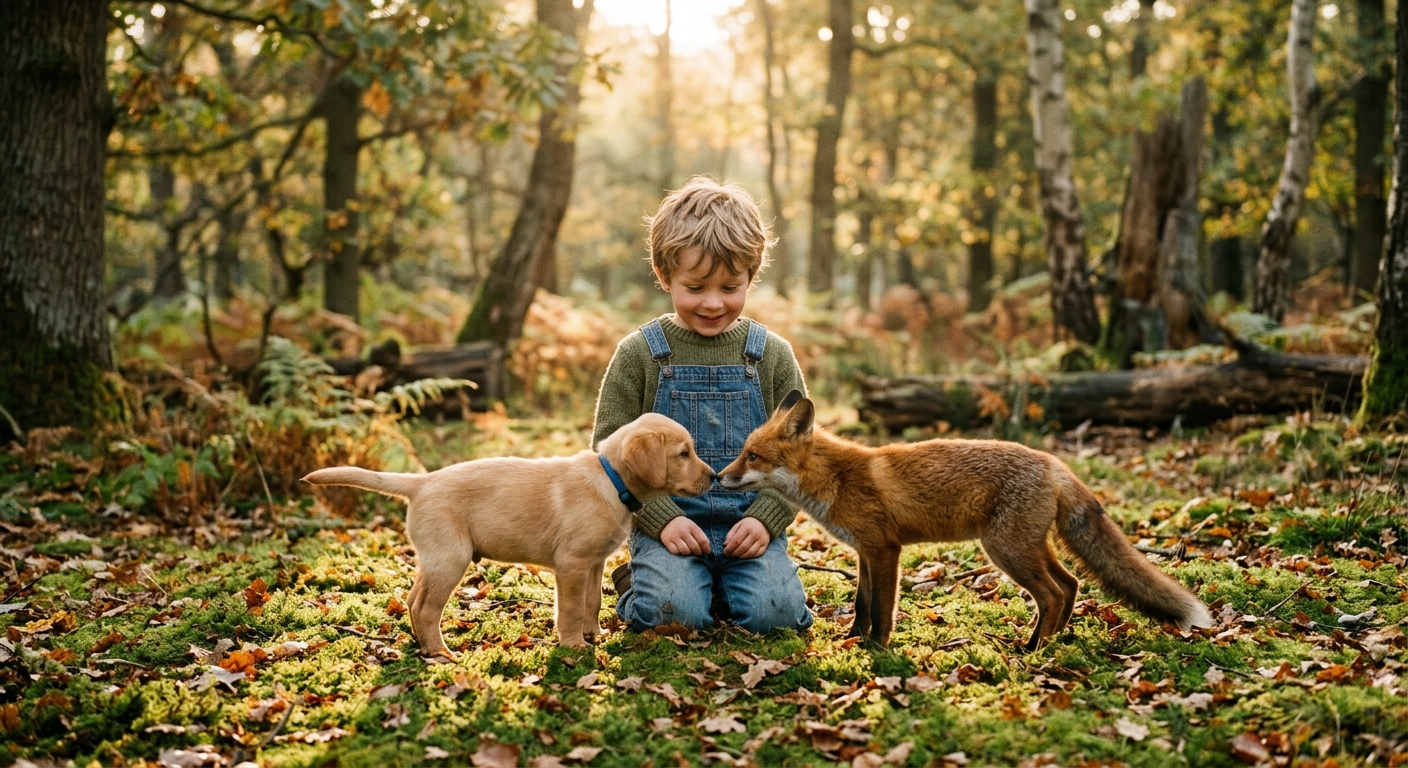
Foxes and Jackals: While solitary compared to wolves, foxes display the inquisitive, playful temperaments often observed in smaller terrier breeds. The famous Russian silver fox domestication experiment demonstrated that selecting purely for tameness yields physical changes reminiscent of domestic dogs, including floppy ears, piebald coats, and wagging tails.
-
Hyenas: Though phylogenetically closer to felids, spotted hyenas represent a striking case of convergent evolution. Their heavy-jawed craniums, sloped torsos, and highly structured clan dynamics mimic large canine pack behaviors to an extraordinary degree.
Non-Canid Mammals with Canine Temperaments
Beyond the order Carnivora, several unexpected mammalian orders feature species that mirror canine demeanor, affection, and intelligence.
| Species Category | Primary Habitat | Behavioral Parallels to Dogs | Cognitive Traits |
| Capybaras | South American Wetlands | Docile nature, social tolerance, affection seeking | High social intelligence, herd coordination |
| Pigs (Sus domesticus) | Agricultural & Wild | Responsiveness to names, playfulness, loyalty | Superior problem-solving, advanced spatial memory |
| Pinnipeds (Seals/Sea Lions) | Marine / Coastal | Curiosity, facial expressiveness, trainability | Sound imitation, complex trick learning |
| Rats (Rattus norvegicus) | Global / Terrestrial | Empathy, enjoyment of tickling, strong bonding | Maze navigation, altruistic behavior |
Domestic pigs, for instance, frequently surpass dogs in standardized cognitive assessments. They form deep emotional bonds with handlers, respond eagerly to reward-based training, and demonstrate distress when isolated from companions. Similarly, pinnipeds—often referred to colloquially as the “dogs of the sea”—share a common evolutionary ancestor with arctoid carnivores, explaining their striking facial expressions, playfulness, and high capacity for human interaction.
Exotic Companionship and Legal Realities
Understanding the broader spectrum of animal companionship requires examining comprehensive information of pets across various jurisdictions. While the desire to keep exotic species that act like dogs is widespread, biological needs and regulatory frameworks present substantial hurdles.
[Domesticated vs. Wild Companionship]

Domesticated (e.g., Dogs, Pigs, Cats)
 ├── Millennia of artificial selection for low aggression
 ├── Inherent understanding of human social cues
 └── Clear legal status and accessible veterinary care

Wild / Exotic (e.g., Foxes, Coatimundis, Otters)
 ├── Retained wild instincts and unpredictable adult aggression
 ├── Complex dietary and environmental needs
 └── Stringent permit requirements and veterinary scarcity
Compiling detailed information of pets reveals that wild animals—regardless of how tame they appear in youth—retain wild instincts upon reaching sexual maturity. Species like coatimundis or tame foxes require specialized containment, complex enrichment, and exotic veterinary care that the average household cannot provide.
Assessing Suitability: Canine Alternatives in the Domestic Realm
For households seeking a companion that offers canine-like interactions without the legal and ethical complications of exotic animals, several fully domesticated options exist:
-
Ferrets: Highly energetic, playful, and inquisitive, ferrets exhibit the mischievous curiosity of working terriers, engaging in play-fighting and bonding closely with owners.
-
Rats: Frequently described as miniature dogs, domestic rats crave physical affection, groom their human companions, and can easily learn tricks using positive reinforcement.
-
Goats: In rural settings, domesticated goats exhibit dog-like affection, following owners across pastures and seeking head scratches with enthusiasm.
The Biological Blueprint of Bonding
Ultimately, whether observing wild carnivores, marine mammals, or domesticated alternatives, the traits that make animals like dogs so captivating stem from shared social evolution. Species that rely on group cohesion, clear communication, and emotional attunement naturally mirror the behaviors humans cherish in canine companions. Synthesizing accurate information of pets ensures that prospective animal guardians respect the innate biological needs of each unique species, fostering healthy, lifelong bonds rooted in understanding rather than assumption.