Stepping out for daily walks is the ultimate bonding ritual between a dog and their human. However, navigating the modern market for canine gear can quickly feel overwhelming. Between aesthetic leather pieces, heavy-duty tactical nylon, and specialized training rigs, finding the exact setup to suit your dog’s size, temperament, and daily routine requires looking beyond mere surface appeal.
Equipping your canine companion with the right trio of gear—collars, harnesses, and leashes—ensures safety, optimal control, and ergonomic comfort for both ends of the tether.
The Anatomy of Canine Restraint and Control
Every stroll through an urban neighborhood or forest trail relies on mechanical physics and canine bio-mechanics. Choosing between a neck-based collar and a torso-based harness dictates how kinetic energy distributes across your dog’s anatomical structures when sudden tension occurs.
[Neck Tension vs. Torso Distribution]

Collar Application:  [Tension] --> Cervical Vertebrae / Trachea (Concentrated Point)
Harness Application: [Tension] --> Sternum / Scapular Ridge (Dispersed Force)
Understanding this force distribution is essential for protecting vulnerable structures, such as the trachea and cervical spine, especially in smaller breeds or dogs prone to sudden pulling.
1. Selecting the Right Collar: Function, Materials, and Fit
A standard collar serves as your dog’s primary identity board and everyday accessory. While simple in design, selecting the right material and mechanism determines long-term comfort and safety.
Material Benchmarks
-
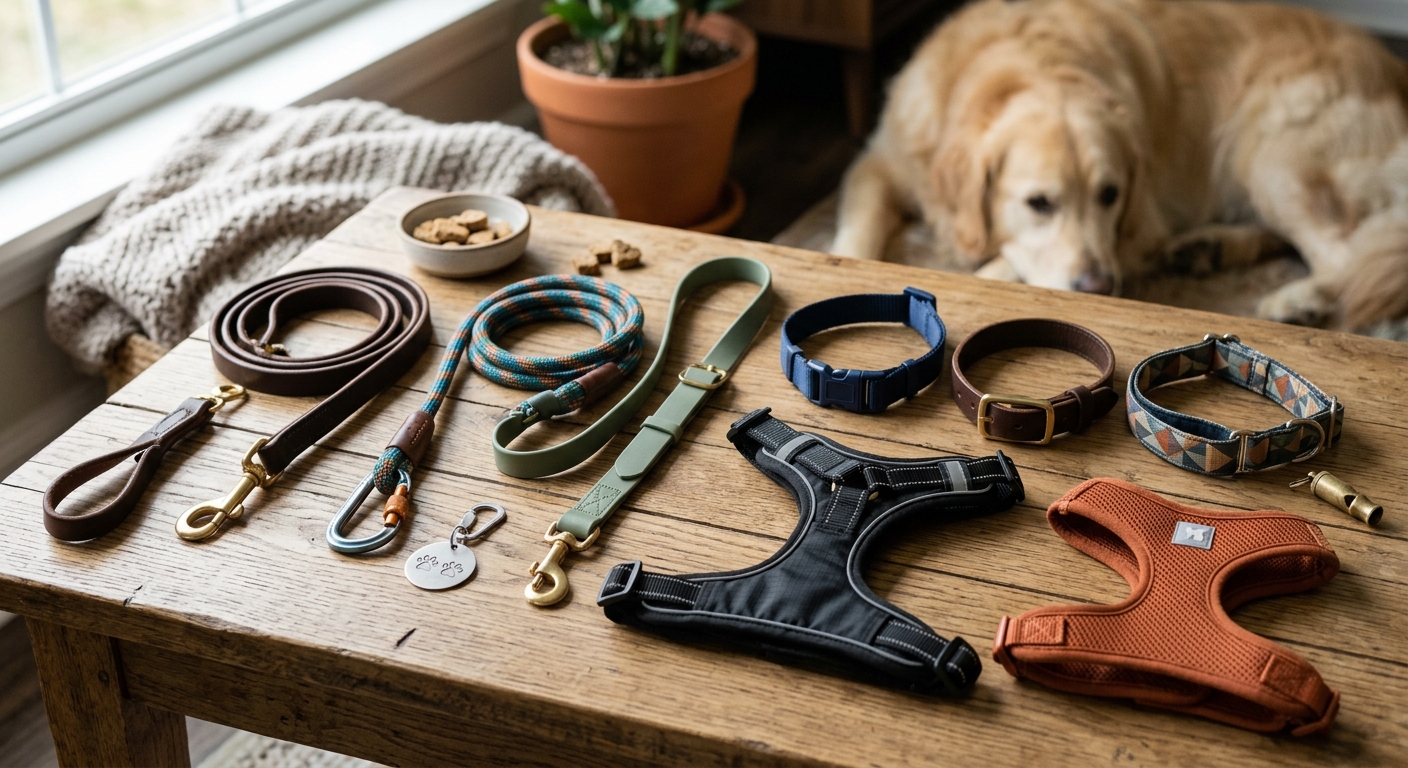
Biothane & Waterproof Synthetics: Polyester webbing coated with TPU or PVC. Highly durable, odor-proof, and impervious to moisture. Perfect for adventurous dogs that love water.
-
Heavy-Duty Nylon Webbing: The classic industry standard. Offers high tensile strength and vibrant color options, though it can absorb oils and harbor microbes over time if unwashed.
-
Full-Grain Leather: Ages with an attractive patina and softens over time. Requires periodic oil conditioning to prevent stiffness and dry cracking.
Mechanism Varieties
When choosing a leash and collar pairing, the locking mechanism determines fast release versus absolute security:
-
Quick-Release Side Buckles: Plastic or aluminum hardware that snaps shut effortlessly. Ideal for low-risk, everyday casual walking.
-
Traditional Metal Pin Buckles: Operates like a human belt. Offers robust mechanical integrity for high-energy or larger breeds.
-
Martingale (Limited-Slip) Collars: Features a dual-loop design that gently tightens under tension to prevent narrow-headed breeds (such as Greyhounds or Whippets) from backing out, without choking the animal.
2. The Harness Matrix: Ergonomics and Training Dynamics
For active walks, high-arousal environments, or growing puppies, a chest harness offers superior force distribution compared to neck-only restraints.
[Harness Styles & Pull Dynamics]

Front-Clip (No-Pull):  Lead connects at Sternum --> Redirects Forward Momentum Sideways
Back-Clip (Casual):   Lead connects at Scapula --> Allows Uninhibited Forward Propulsion
Dual-Clip (Hybrid):   Leads connect at both points --> Maximum Steering & Control
Y-Shaped vs. H-Shaped vs. Step-In Models
A proper harness must permit full, uninhibited range of motion through the shoulders. Y-shaped harnesses mirror natural anatomical contours, resting low on the chest bone and keeping the scapula free to extend fully. Avoid restrictive horizontal front-strap harnesses, which press across the shoulder joint and can alter natural gait over time.
For young canine recruits, starting with a lightweight puppy harness encourages proper leash orientation without placing unnecessary strain on developing skeletal structures and growth plates.
Front-Clip vs. Back-Clip Attachments
-
Front-Chest Attachment: Redirects forward pulling force back toward the handler, naturally turning the dog’s body rather than letting them lean into tension.
-
Dorsal (Back) Attachment: Best suited for well-trained dogs that walk on a loose lead, as well as tracking activities or casual park visits.
3. Decoding the Dog Leash: Length, Tensile Strength, and Utility
The lead acts as the direct line of communication between handler and dog. A quality dog leash balances tactile grip, shock absorption, and situational versatility.
| Leash Type | Typical Length | Best Use Case | Handler Benefits |
| Standard Fixed Lead | 4 to 6 Feet | Urban environments, busy sidewalks | Precise control, clean feedback loop |
| Long Line / Tracking Lead | 15 to 50 Feet | Recall training, open field exploration | High freedom, natural sniffing behavior |
| Hands-Free / Crossbody | 6 to 8 Feet | Running, hiking, multi-tasking | Ergonomic weight distribution, hands-free ease |
| Traffic Lead | 1 to 2 Feet | Dense crowds, vet visits, heavy transit | Immediate proximity, maximum leverage |
The Case Against Flexi (Retractable) Leashes
Retractable leads maintain constant, subtle tension on your dog’s body, inadvertently rewarding pulling behavior. Furthermore, thin cord mechanisms pose significant friction-burn hazards, lack immediate physical stopping power, and fail under sudden shock loads.
Integrating Your Setup: Matching Gear to Life Stages
Equipping your canine partner requires selecting harmonized dog collars harnesses leashes tailored to their specific developmental phase and lifestyle needs.
[Life Stage Adaptation Strategy]

Puppyhood Stage:  Lightweight Y-Harness + Fixed Nylon Lead + Breakaway ID Collar
Adult Active:     Biothane Y-Harness + Waterproof Hands-Free Lead + Durable Flat Collar
Senior Stage:     Padded Support Harness + Lightweight Fixed Lead + Soft Leather Collar
The Puppy Phase
Focus on featherweight materials that reduce drag. A padded puppy harness featuring dual-attachment points allows you to build loose-lead habits early without stressing delicate neck muscles.
The High-Drive Adult Phase
Prioritize waterproof, high-tensile Biothane or reinforced tactical nylon hardware. A dual-clip harness paired with a multi-way dog leash offers instant flexibility, whether navigating busy city streets or exploring rugged backcountry trails.
The Senior Phase
Focus on soft-touch neoprene linings, ultra-lightweight hardware, and padded support handles that help assist senior dogs over obstacles or into vehicles.
Measuring for a Precision Fit
Using a flexible cloth tape measure ensures your gear fits comfortably without chafing or slip-outs:
-
Neck Circumference: Measure at the widest point near the base of the neck. Ensure you can comfortably slide two fingers between the strap and skin.
-
Girth / Chest Width: Measure around the widest part of the ribcage, typically two inches behind the front legs.
-
Back Length: Measure along the spine from the base of the neck to the base of the tail to verify proper harness strap placement.
Final Considerations for the Ideal Walking Setup
Invest in high-grade aluminum or brass hardware to ensure rust resistance and secure locking mechanisms. Routinely inspect stitching along high-stress points for fraying or wear.
By matching a well-designed puppy harness or ergonomic adult harness with a durable dog leash and a comfortable leash and collar combination, you build an integrated system designed for safety, comfort, and years of enjoyable adventures together.