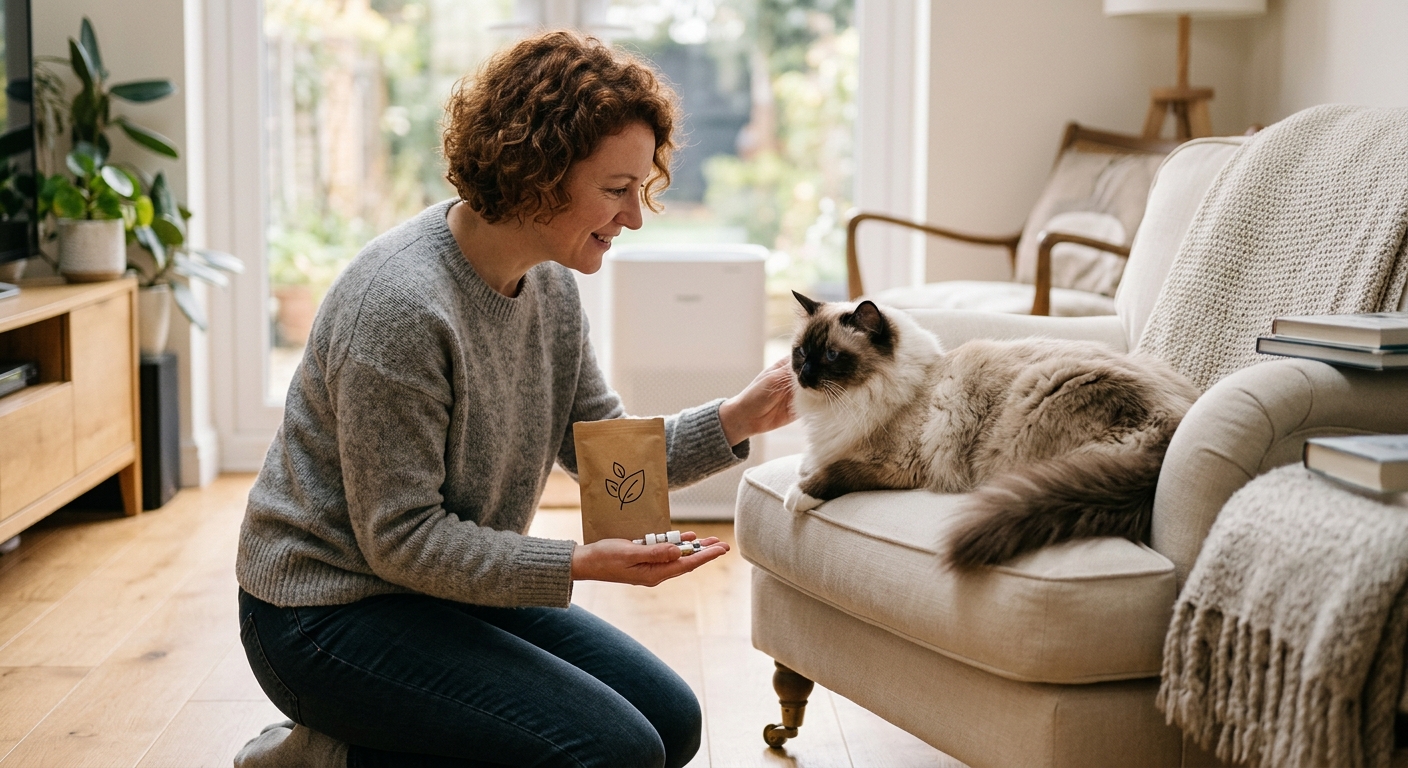
A persistent myth circulates within feline enthusiast circles regarding the hypoallergenic nature of certain breeds. Among these, the ragdoll cat and allergies represent a frequent point of discussion for prospective pet owners who suffer from hypersensitivity to feline vectors. The distinctive physical characteristics of the breed—namely their plush coat, striking blue eyes, and large physical frame—often lead individuals to assume they possess unique biological properties regarding allergen emission. However, analyzing the intersection between a ragdoll cat and allergies requires a clear, fact-based understanding of feline biochemistry, coat anatomy, and environmental allergen dispersion.
The Molecular Basis of Feline Allergies
To understand why a ragdoll cat and allergies can present challenges for sensitive individuals, one must first identify the primary perpetrator of feline-induced immune responses.
Contrary to popular belief, cat hair itself is not the intrinsic allergen. The root cause of allergic reactions in humans is a secretoglobin protein designated as Fel d 1. This specific glycoprotein is synthesized primarily by the cat’s:
-
Sebaceous glands located within the skin
-
Salivary glands, which coat the fur during routine self-grooming
-
Lachrymal glands and anal glands
When a cat grooms its coat, saliva rich in Fel d 1 is distributed across the fur. As the saliva dries, the protein binds to microscopic dander particles—dead skin flakes—and loose hair shafts. These particles become airborne, suspended easily in domestic currents due to their infinitesimal size and buoyant mass.
Biological Profiles: Do Ragdolls Produce Less Fel d 1?
When evaluating a ragdoll cat and allergies, prospective owners often wonder whether the breed naturally generates lower levels of the offending protein.
The short, definitive answer based on veterinary literature is no.
Ragdoll cats produce Fel d 1 at levels consistent with the average domestic cat. Unlike breeds such as the Siberian or the Balinese, which have been documented in select studies to exhibit lower baseline concentrations of Fel d 1 protein synthesis, the Ragdoll breed possesses no genetic mutation that suppresses allergen production.
| Breed Category | Average Fel d 1 Output | Coat Configuration |
| Ragdoll | Standard domestic baseline | Single-layer, semi-longhair |
| Siberian | Low to moderate baseline (varies) | Heavy, water-repellent triple coat |
| Balinese | Low to moderate baseline | Single-layer, fine longhair |
| Domestic Shorthair | Standard domestic baseline | Variable single or double coat |
The persistent belief that a ragdoll cat and allergies are mutually compatible stems largely from the breed’s specific coat architecture rather than its underlying gland secretions.
Coat Architecture and Dander Mechanics
The Ragdoll possesses a semi-long coat that is distinctively soft and silky. Crucially, the breed lacks a dense, woolly undercoat. This anatomical trait alters how hair and dander move throughout a living space:
-
Reduced Undercoat Blowout: Because Ragdolls lack a plush undercoat, they do not experience the heavy seasonal shedding phases typical of double-coated breeds like the Maine Coon or Norwegian Forest Cat.
-
Hair Trapping: The silky topcoat fibers tend to trap shed hair locally rather than shedding constantly into airborne currents, provided the coat is regularly maintained.
-
Dander Load Accumulation: Conversely, because the coat is semi-long and dense, the sheer surface area of a full-grown Ragdoll can retain substantial amounts of dried salivary proteins.
While the lack of an undercoat can mean fewer visible clumps of hair tumbling across hard flooring, it does not lessen the presence of microscopic dander particles floating in the environment.
Environmental and Clinical Management
For households navigating a ragdoll cat and allergies, absolute eradication of allergens is rarely attainable. However, systematic mitigation strategies can significantly reduce environmental allergen concentrations.
[Allergen Reduction Strategy]
       │
       ├── Ambient Air: HEPA Air Purifiers (Continuous Operation)
       ├── Surface Control: High-Heat Laundry & Microfiber Vacuuming
       ├── Feline Care: Daily Line-Brushing & Neutralizing Diets
       └── Boundary Management: Designated Cat-Free Zones (Bedroom)
Air Filtration Infrastructure
High-Efficiency Particulate Air (HEPA) purifiers are vital for managing airborne Fel d 1. Units should be placed in high-traffic living areas and bedrooms, running continuously to catch microscopic dander before it settles into upholstery or carpets.
Grooming Regimens
While brushing a Ragdoll is necessary to prevent matting, the act of combing releases concentrated plumes of dander into the air. Non-allergic family members should perform line-brushing outdoors whenever possible. Using damp microfiber cloths or specialized feline dander wipes can also bind surface proteins on the coat without subjecting the cat to stressful baths.
Environmental Zoning
Establishing cat-free sanctuaries—specifically the primary bedroom—ensures the immune system receives dedicated recovery periods. Keeping bedding free of feline dander reduces nocturnal respiratory irritation and systemic inflammation.
Specialized Nutrition
Dietary interventions now exist that neutralize active Fel d 1 at the source. Commercial cat foods utilizing egg-yolk derivative proteins containing anti-Fel d 1 IgY antibodies can bind to active allergens in the cat’s mouth during mastication, significantly reducing the amount of active allergen spread to the fur during grooming.
Clinical Evaluation Before Adoption
Before introducing a feline companion into a home with known sensitivity, relying on breed generalizations regarding a ragdoll cat and allergies is ill-advised. Individual cats within the same breed exhibit wide variance in their absolute Fel d 1 output.
Prospective owners should arrange controlled exposure trials with an adult Ragdoll in a neutral environment, consult an allergist for targeted immunotherapy (allergy shots), and ensure all mechanical and environmental controls are operational prior to bringing a pet home.